
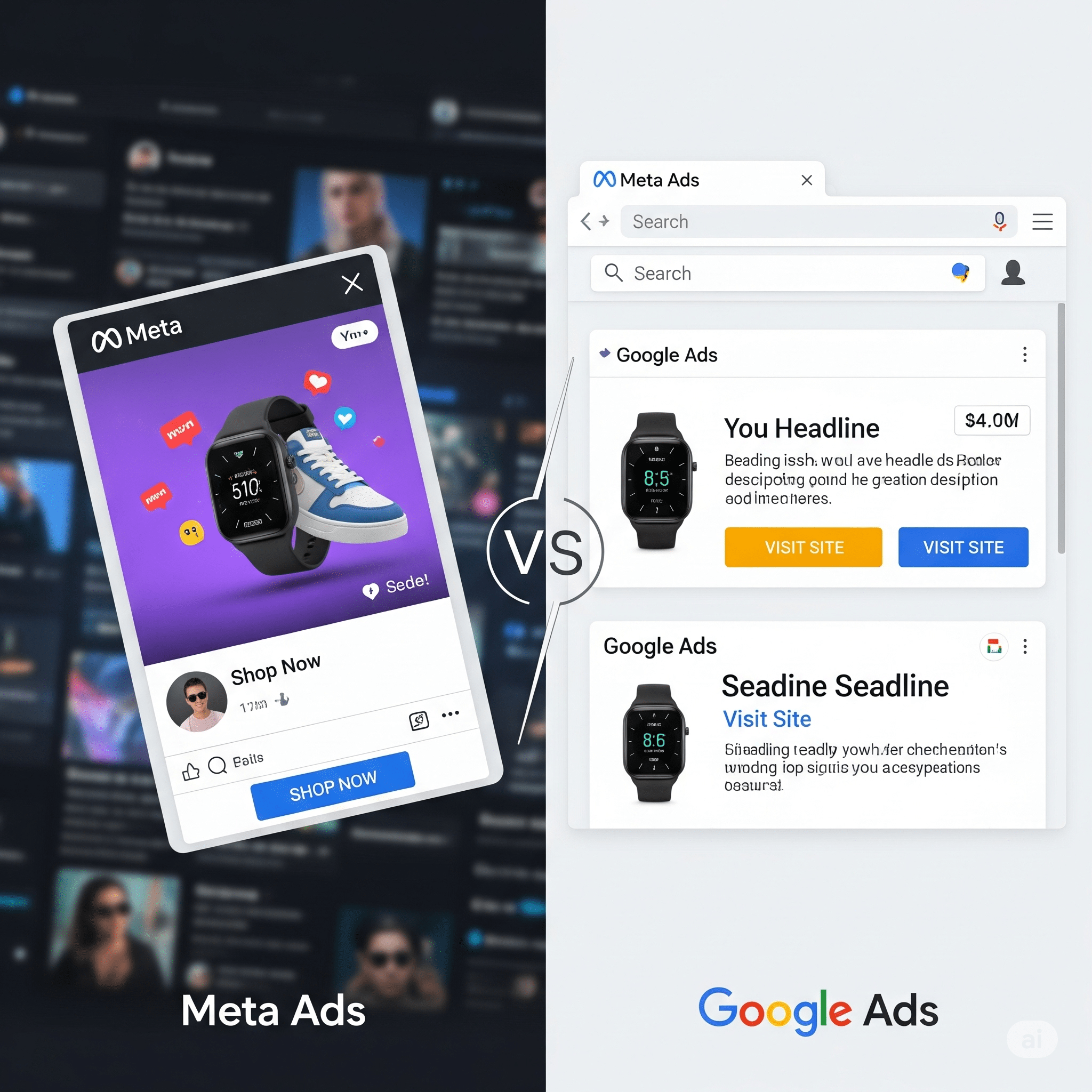
Digital Advertising in 2025
In the constantly changing landscape of digital marketing, two giants continue to lead the paid advertising market: Google Ads and Facebook Ads (also known as Meta Ads). Local and international businesses heavily rely on these platforms to generate leads, enhance visibility, and increase ROI through paid advertisements.
But which — Google Ads or Facebook Ads — produces the best results for your company?
This blog dissects each platform, comparing their targeting options, ad formats, and costs. It also offers an expert’s perspective to help you select the best choice for your upcoming SMM (social media marketing) campaign or PPC advertising strategy
What Are Google Ads?
Google Ads is Google’s online advertising platform, enabling businesses to display ads on YouTube, the Google Search Network, and the Google Display Network (GDN) It’s primarily used to support PPC advertising, where advertisers bid on keywords and pay when users click on their ads.
Key Features of Google Ads:
- Search intent targeting allows you to display advertisements to users who are actively seeking solutions.
- Google’s vast reach across Google platforms.
- Detailed keyword control.
- Works well with B2B and B2C models.
Best For:
- Service-based businesses
- E-commerce stores
- Brands targeting high-intent users
What Are Facebook Ads (Meta Ads)?
Facebook Ads, now part of Meta Ads, allows advertisers to create paid ads on Facebook, Instagram, Messenger, and the Meta Audience Network. Contrary to Google, Meta Ads focus more on user behavior and interests, not just keywords.
Key Features of Facebook Ads:
- Targeting based on behavioral activities.
- Visually rich formats, such as carousel, video, or stories.
- Integrated across all Meta platforms.
- Highly effective in generating brand awareness and SMM campaigns.
Best For:
- E-commerce product launches
- Mobile app promotion
- Lifestyle and visual brands
Targeting Comparison: Search Intent vs. Audience Interests
Google Ads Targeting:
- Keywords and phrases entered into search engines.
- Geolocation, language, and device type.
- Remarketing via cookies.
- Ideal for direct response marketing.
Facebook Ads Targeting:
- Hobbies, interests, life events, behavior.
- Custom Audiences and Lookalike Audiences.
- Retargeting via Facebook Pixel.
- Great for establishing brand visibility using SMM.
SEO Tip: Mix behavior-based and intent-based targeting to create a hybrid ad strategy.
Cost Breakdown: Which Platform Is More Budget-Friendly?
Google Ads Cost:
- Competitive CPC (often higher in certain industries such as healthcare or finance).
- Bidding model based on demand for keywords.
- Potential for high conversion rates for bottom-of-the-funnel users.
Facebook Ads Cost:
- Lower CPC on impressions and clicks.
- Affordable for small and medium-sized businesses.
- A high ROI on lead generation and brand engagement.
| Platform | Average CPC | Cost Model | ROI Potential |
| Google Ads | $1-$5 | Pay-per-click | High (search-based) |
| Facebook Ads | $0.50-$2 | CPM/CPC | High (engagement-based) |
Ad Formats: Text vs. Visual Storytelling
Google Ads Formats:
- Text-based Search Ads.
- Banner-style Display Ads.
- Video Ads on YouTube.
- Shopping Ads for eCommerce.
Facebook/Meta Ads Formats:
- Carousel, photo, video, and collection ads.
- Instagram Stories and Reels Ads.
- Lead forms and Messenger ads.
- Ideal for mobile-first marketing.
Visual Branding Insights: If your brand relies on imagery, stories, or lifestyle appeal, Meta Ads are much more efficient. If you’re seeking options, Google Ads is the dominant choice.
User Intent & Buyer’s Journey
- Google Ads = High-Intent (people looking for products or services).
- Facebook Ads = Low-to-Medium intent (people finding a brand via social media).
Combining both platforms makes an extremely effective digital marketing funnel:
Awareness (Facebook Ads) → Interest (Remarketing) → Conversion (Google Search Ads)
Analytics & Optimization
Google Ads Tracking Tools:
- Google Analytics
- Conversion tracking
- Keyword performance reports
- A/B testing of ads
Facebook/Meta Ads Analytics:
- Meta Pixel tracking
- Engagement metrics (likes, shares, comments)
- Audience breakdown for the campaign
- Split testing (creative, copy, audience)
The SMM Professional Tip is to always experiment with various creatives, copy, and audience segments in your PPC social media campaigns.
Pros and Cons Overview
| Feature | Google Ads | Facebook (Meta) Ads |
| Users’ Intent | High (search intent) | Medium-low (behavioral search) |
| Cost per Click | Higher | Lower |
| Targeting Style | Keyword, Location, Demographic | Interest, Behavior, Demographic |
| Creative Control | Limited (text-focused) | High (visual-first) |
| Best Use Case | Urgent service, Local search | Brand recognition, product promotion |
| Ad Platforms | Google Search, YouTube, GDN | Facebook, Instagram, Messenger |
Can You Use Both? (Yes — and You Should)
The most successful digital marketing strategies utilize both platforms simultaneously:
- Utilize Facebook Ads to generate interest and build a following.
- Utilize Google Ads to capture users looking for your product or brand.
- Retarget users who have interacted with your Facebook Ads using Google Display Ads.
This full-funnel strategy improves the ROI of your social media marketing and increases conversion rates.
Conclusion: Which Platform Is Best for Your Business?
There’s no standard answer that fits all. Your choice between Google Ads and Meta Ads will depend on the following factors:
- Business objectives (leads vs. awareness)
- Target audience
- Advertising budget
- Sales funnel stage
Final Recommendation:
Most businesses find that a mix of SMM via Meta Ads and search marketing through Google Ads works best. This allows you to reach your target audience throughout the entire process, from discovery to decision-making.
Need Help Running Profitable Ad Campaigns?
We are Digital Cloud Hub, and we specialize in crafting high-converting advertising strategies that utilize both Google Ads and Facebook Ads. Our expert team can help you:
- Set up full-funnel online ad campaigns.
- Optimize your social media advertisements to increase your ROI.
- Test, track, and then scale successful campaigns.
Contact us today to schedule a complimentary strategy session.
